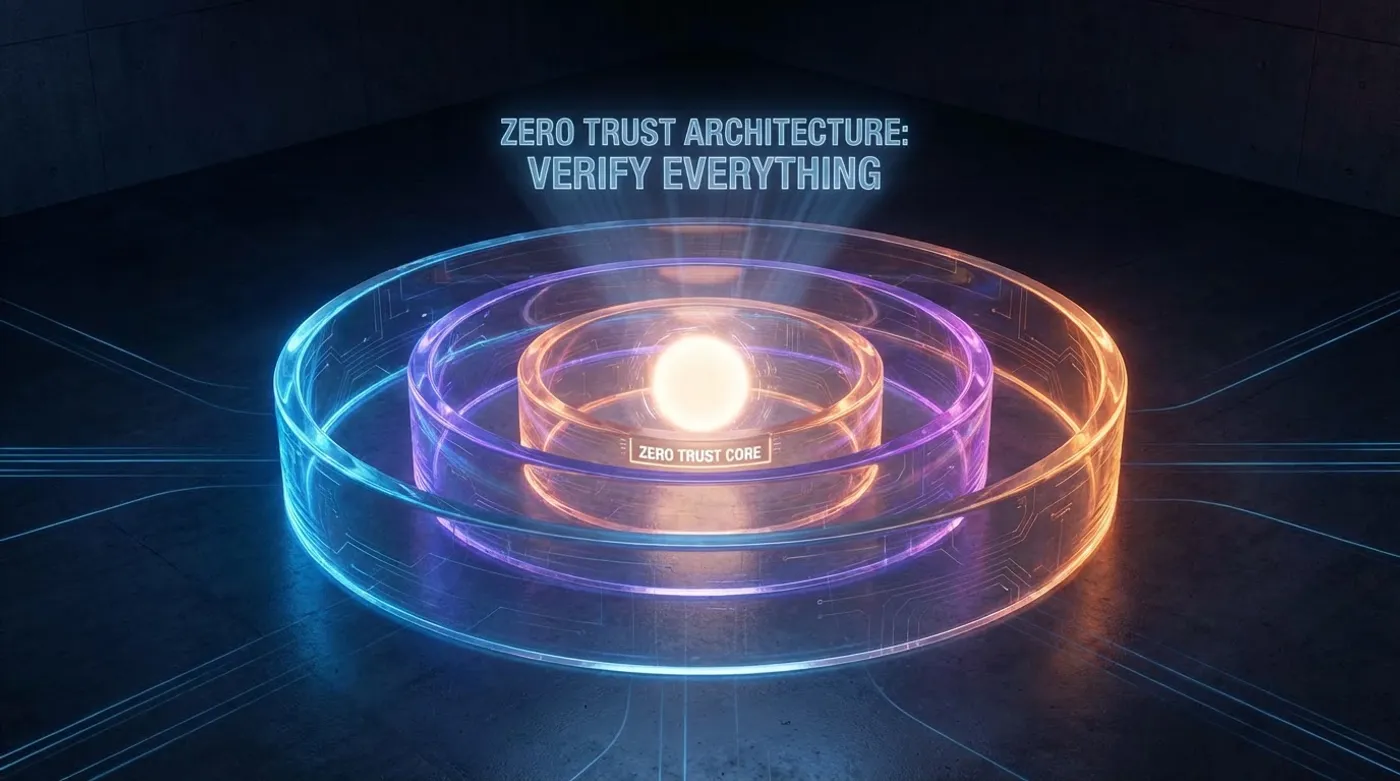
Zero Trust Architecture: Beyond the Buzzword
What zero trust actually means for your network, your users, and your budget — a practical guide for business leaders.
Related articles
All articles
Jan 15, 2026
The True Cost of a Data Breach in 2026
Beyond the headline number — what a breach actually costs small and mid-sized businesses in downtime, reputation, and regulatory penalties.
cybersecurity compliance risk management

Feb 10, 2026
Phishing Is Still the #1 Attack Vector — Here's What to Do About It
Despite billions spent on cybersecurity, phishing remains the most effective way into your organization. Here's a layered defense strategy.
cybersecurity email security phishing

Feb 14, 2026
EDR vs MDR vs XDR: What Your Business Actually Needs
Endpoint detection, managed detection, extended detection — cutting through the acronyms to find the right security approach for your organization.
cybersecurity EDR MDR